By Shakiyla Huggins October 23, 2023

In the ever-evolving landscape of educational psychology, understanding the drivers of human motivation is paramount. The Self-Determination Theory, developed by Deci & Ryan (2000), offers valuable insights into the core psychological needs that fuel our actions and aspirations. In this blog post, we delve into the essence of the Self-Determination Theory and explore how it shapes our pursuit of goals, intrinsic motivation, and overall well-being.
The Shifting Landscape of Motivation
Let’s start by shaking things up a bit. What do you think drives you more: your goals or your needs?
Historically, the concept of “needs” held a central role in understanding motivation1. Needs determined the content of our motivation and the direction of our actions. However, as research delved into cognitive theories, the focus shifted from needs to goals1. Rather than the content of goals, researchers began examining the process of goal selection. Goals became the dominant concept in understanding motivation.
Rediscovering the Importance of Needs
The Self-Determination Theory, in contrast to the focus on goals, underscores the significance of addressing the psychological needs that underlie and empower these goals. To gain a complete understanding of goal-directed behavior, psychological development, and well-being, we must consider the needs that infuse our goals with psychological potency and steer our pursuits1.
The Three Psychological Needs
At the heart of the Self-Determination Theory are three core psychological needs2:

These three psychological needs are fundamental to understanding both the “what” (content) and the “why” (regulatory process) of our pursuit of goals1.
The Continuum of Motivation
The three psychological needs of autonomy, competence, and relatedness were not randomly chosen. These needs emerged from multiple empirical processes and were the only way to psychologically justify the interpretation and integration of research results in intrinsic motivation and internalization (more commonly identified as self-determined extrinsic motivation)2. The Self-Determination Theory introduces a continuum of motivation, shedding light on the interplay between intrinsic and extrinsic motivations3.

Understanding where we fall on this continuum can provide valuable insights into our motivations and the factors that drive our behavior.
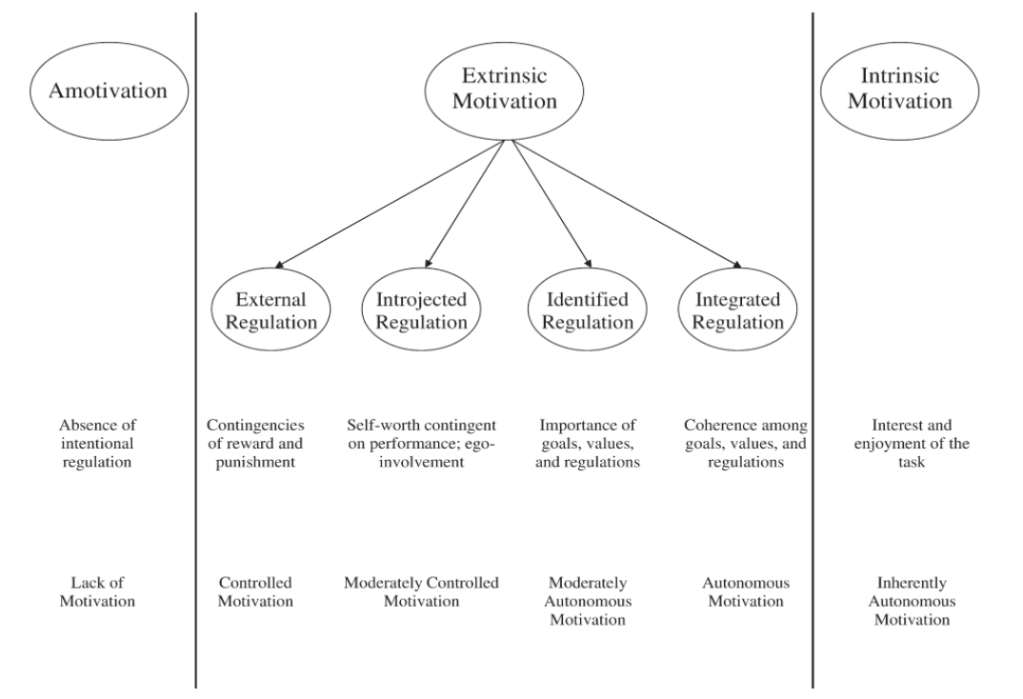
In the coming weeks, we will dive deeper into a discussion on the self-determination continuum. For now, take a moment to consider where you typically find yourself. Are you more inclined toward intrinsic motivation, extrinsic motivation, or perhaps somewhere in between? Let’s explore this together!
Conclusion
In conclusion, the Self-Determination Theory provides a holistic view of motivation, emphasizing the importance of autonomy, competence, and relatedness in shaping our goals and driving our actions. By recognizing and nourishing these psychological needs, we can unlock our intrinsic motivation and promote overall well-being.
References
- Deci, E. L., & Ryan, R. M. (2000). The “What” and “Why” of Goal Pursuits: Human Needs and the Self-Determination of Behavior. Psychological Inquiry, 11, 227-268. Chinese Science Bulletin, 50(22), 227–268.
- Deci, E. L., & Ryan, R. M. (2012). Motivation, Personality, and Development Within Embedded Social Contexts: An Overview of Self-Determination Theory. The Oxford Handbook of Human Motivation. https://doi.org/10.1093/oxfordhb/9780195399820.013.0006
- Gagné, M., & Deci, E. L. (2005). Self-determination theory and work motivation. Journal of Organizational behavior, 26(4), 331-362.
- Sailer, M., Hense, J. U., Mayr, S. K., & Mandl, H. (2017). How gamification motivates: An experimental study of the effects of specific game design elements on psychological need satisfaction. Computers in Human Behavior, 69, 371–380. https://doi.org/10.1016/j.chb.2016.12.033
 Gamifying your Designs Through Self-Determination
Leave a comment