By: Shakiyla Huggins May 24, 2024

Picture this: you’re staring down a list of questions for a study guide, feeling about as thrilled as a soggy sandwich. But what if I told you that studying could be an epic adventure, complete with animated characters, hidden treasures, and globe-trotting escapades? Buckle up because we’re about to embark on a journey where we will harness the problem-solving powers of gamification to turn your exam prep from drab to fab! Stick around to the end to try out this adventure! Plus we want to hear your thoughts!
Introduction
Remember, gamification isn’t just about making learning fun. Instead, it harnesses the power of game elements to solve a problem. So, as always, we must ask ourselves, “What problem am I solving today?”
It all started with a challenge from an instructor: Students are dragging their feet when it comes to studying. Students are not happy with their scores on the course exams and continuously voice their concerns about feeling ill-prepared.
So, how do we motivate the students to pick up their study guide and increase their engagement with the exam prep? The answer: gamification!
From Worksheet to Adventure:
Staring at that study guide, I knew there had to be a better way for students to review their course material. Armed with a healthy dose of creativity and a pinch of daring, I set out to transform that dreary document into something truly extraordinary.
First things first: gamification. I wanted to turn studying into a game — an adventure where every question answered was a step forward, and every topic conquered unlocked new horizons. Thus, the concept of an “around the world” adventure was born.
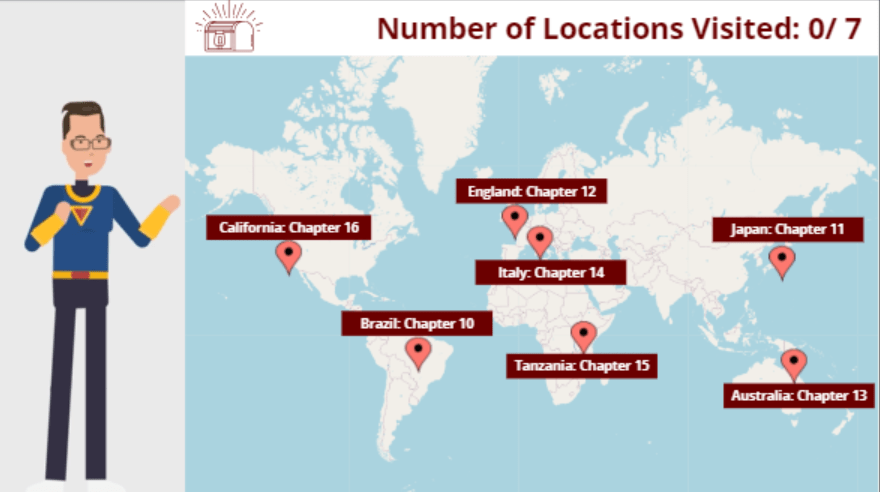
Each chapter of the study guide became a different destination on the journey. From the sunny beaches of California to the vast plains of Tanzania, and from the rugged Outback of Australia to the vibrant streets of Brazil, each location represented a new challenge to overcome and a new set of knowledge to master.
Meet your Narrator
One of the most exciting aspects of this gamified study adventure was the use of a dynamic narrator to guide students through their journey. To make this narrator both engaging and relatable, I turned to Vyond, a powerful tool that allows for the creation of animated characters from real-life photos.
Using a headshot of the course instructor, I transformed him into an animated character who became the voice and face of the adventure. This animated instructor set the stage at the beginning of the quest, explaining the rules and objectives in an engaging and entertaining manner. Not only did this add a layer of familiarity and comfort for the students, but it also bridged the gap between the virtual adventure and the real-world classroom.
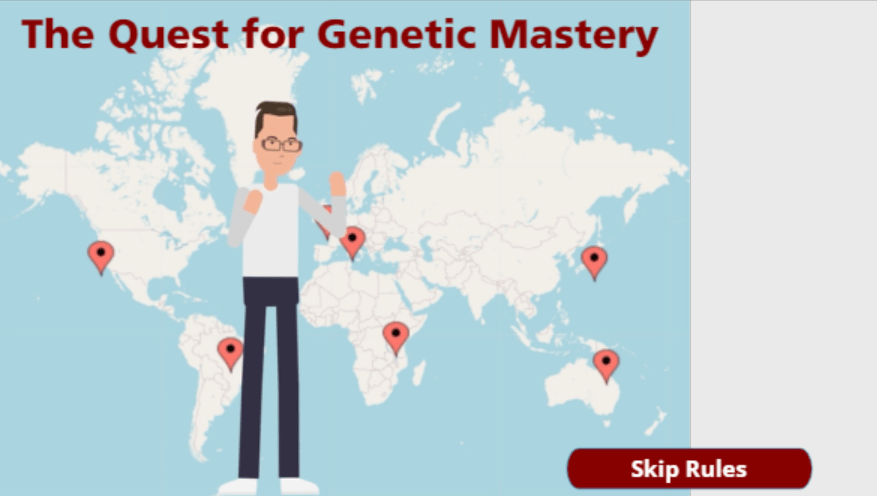
Vyond’s capability to turn a real person’s photo into an animated character is a game-changer. It personalizes the adventure, connecting students directly to their course and instructor in a novel way. This creative approach ensured that the learning experience was not only educational but also deeply engaging and enjoyable.
What’s a Game Without Rules?
Every great game needs rules to make it both challenging and fun, and our study adventure is no exception. Here’s how I turned a simple study session into an epic quest with its own set of exciting rules.
- The Journey Begins: As mentioned, each participant will embark on a journey across seven unique locations on the map. Each location corresponds to a different chapter or topic from the study guide.
- Race Against Time: At each location, there’s a 7-minute timer ticking down. This keeps the pace brisk and the excitement high.
- Answer to Survive: Correct answers are your best friends here. Every correct answer given adds 5 seconds to the timer.
- Loss Aversion: But beware—incorrect answers are like pesky roadblocks. Each wrong answer knocks 7 seconds off your timer, pushing you closer to the brink.
- Prove Your Worth: To move on to the next location, you must answer at least 60% of the questions correctly. This ensures that only the worthy adventurers continue their journey.
Meet Your Characters:
Now, let’s talk characters. Forget dusty textbooks and dull lectures—say hello to a cast of helpful companions, each with their own special powers.

Need a hint? No problem. Want to remove the timer to play without pressure? You got it. Want an additional 5 seconds for correct answers? Your wish is my command. For those craving a challenge, there’s even an option to go au naturel—no superpowers, no safety net, just you and your wits. With these supercharged sidekicks by your side, there’s no challenge too daunting.

Choose Your Own Adventure
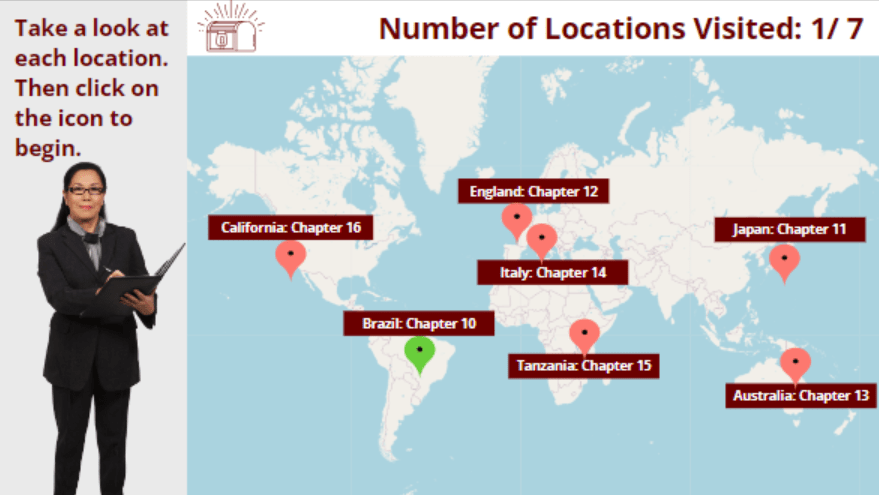
Now, if you’ve been following my style of gamification, you know I’m all about making sure I design from a self-determined point of view, as it plays a crucial role in increased motivation. So, of course, I had to make sure I was building in as much autonomy as I could. There is already the autonomy of character choice, so what can I add next? Enter, choose your own adventure!
Want to tackle Italy first? Go for it. Prefer to hopscotch from Brazil to Japan? Be my guest. The power is in your hands. Just click your location, and it’ll turn green once you’ve finished!
Creating the Game World:
Another exciting part of this gamified adventure was mapping each chapter to a unique, real-world location. Each destination wasn’t just a backdrop; it ties in with the topic of the chapter, providing an additional layer of context and engagement. Students have the opportunity to click on a fun fact for each location, learning something extra special about how that location ties to the topic of the chapter.
For instance, Chapter 15, “The Chromosomal Basis of Inheritance,” took place in the stunning landscapes of Tanzania. Here, students could learn about the discovery of chromosomal inheritance in cichlid fish populations. This fun fact didn’t just add a bit of local color—it directly tied into the chapter’s content, making the material more memorable and relevant.


These fun facts served a dual purpose. They made each location more immersive and exciting, and they provided students with a tangible connection between the study material and real-world applications. It wasn’t just about answering questions anymore—it was about discovering the world, one chapter at a time.
The Final Challenge: Unlocking the Treasure Code
As students journeyed through each chapter, they collected pieces of a secret code hidden as treasures in seven locations: California, Tanzania, Australia, Brazil, Japan, England, and Italy. Answering at least 60% of the questions correctly in each location earned them a piece of this code.
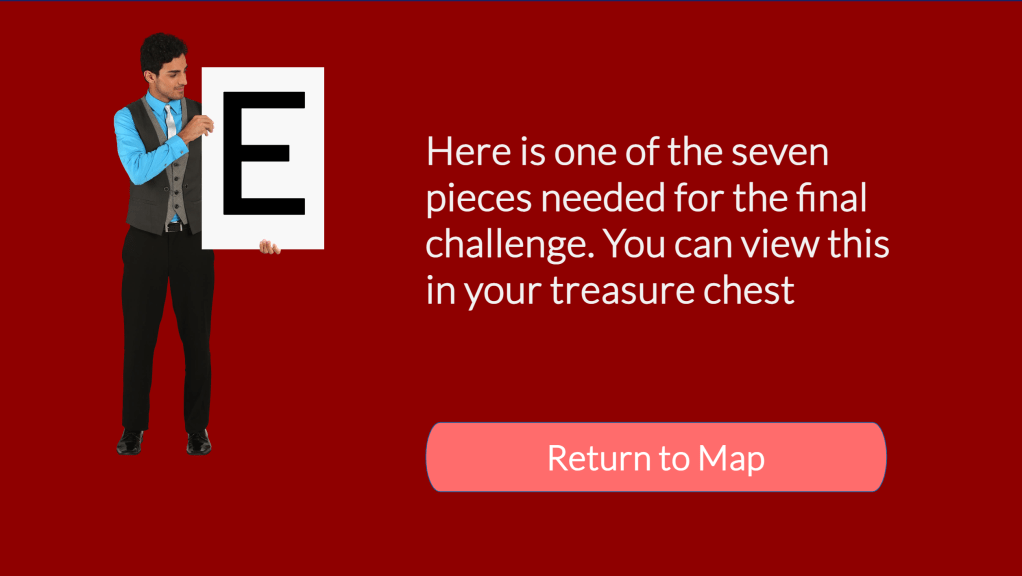
With the seven pieces in hand, the final challenge was to unscramble the letters to reveal the ultimate code. This wasn’t just about rearranging letters—it required recalling what they learned, applying critical thinking, and solving a final puzzle that tied the whole adventure together.

The thrill of piecing together the code provided a fitting climax to the journey, turning the study session into a memorable and engaging quest. The real treasure, however, was the knowledge gained and the skills developed along the way, leaving students both prepared for their exams and more connected to the subject matter.
Conclusion:
From a humble study guide to a pulse-pounding adventure, this gamified journey has shown us that learning doesn’t have to be a snooze-fest. By infusing education with excitement, choice, and a healthy dose of adventure, we’ve transformed the way we approach studying. So, what are you waiting for? It’s time to unleash your inner adventurer and embark on a quest for knowledge like never before! Try out this adventure here!
Oh, by the way! I only talked about one of the psychological needs of the self-determination theory in this post – autonomy. But, of course, the other two are present – competence and relatedness. What aspects of this gamified adventure do you think encompass competence or relatedness? Leave a comment below!
 Gamifying your Designs Through Self-Determination
Leave a comment