By Shakiyla Huggins Novemeber 26, 2024
In the evolving landscape of e-learning, integrating gamification—the use of game mechanics in non-game environments—has shown immense promise in boosting learner engagement, motivation, and retention. But how can we implement gamification thoughtfully and effectively? Well, the ADDIE model is the perfect use case!
Urh et al. (2015) developed a comprehensive framework that maps the gamification process to the familiar ADDIE model, offering a structured approach to weaving gamified elements into the instructional design process.
The ADDIE-Based Framework for Gamification in E-Learning
The ADDIE model has long been a cornerstone in instructional design, providing a systematic approach to creating effective learning experiences. As education evolves in the digital age, the incorporation of gamification elements into this model has become increasingly relevant and beneficial.
Gamification in e-learning refers to the application of game-design elements and game principles in non-game contexts. When integrated with the ADDIE model, it can significantly enhance learner engagement, motivation, and overall learning outcomes.
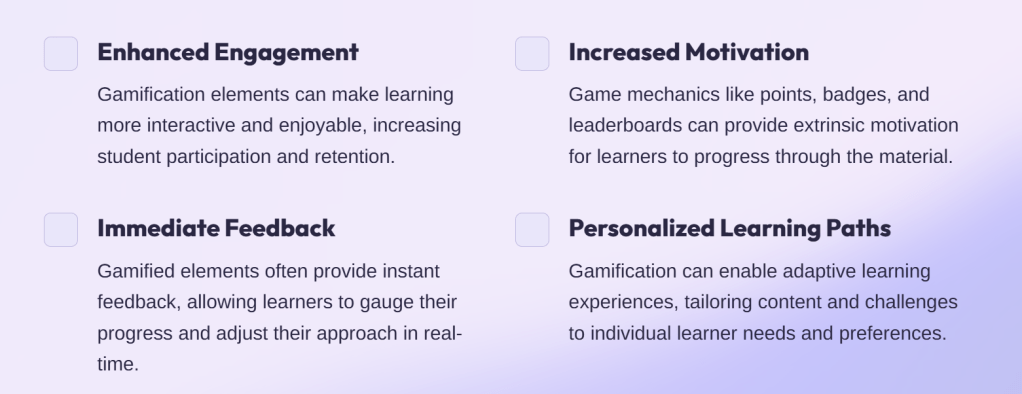
By integrating gamification into each phase of the ADDIE model, instructional designers can create more dynamic, engaging, and effective e-learning experiences. The following sections will explore how to implement gamification elements in each stage of the ADDIE process.
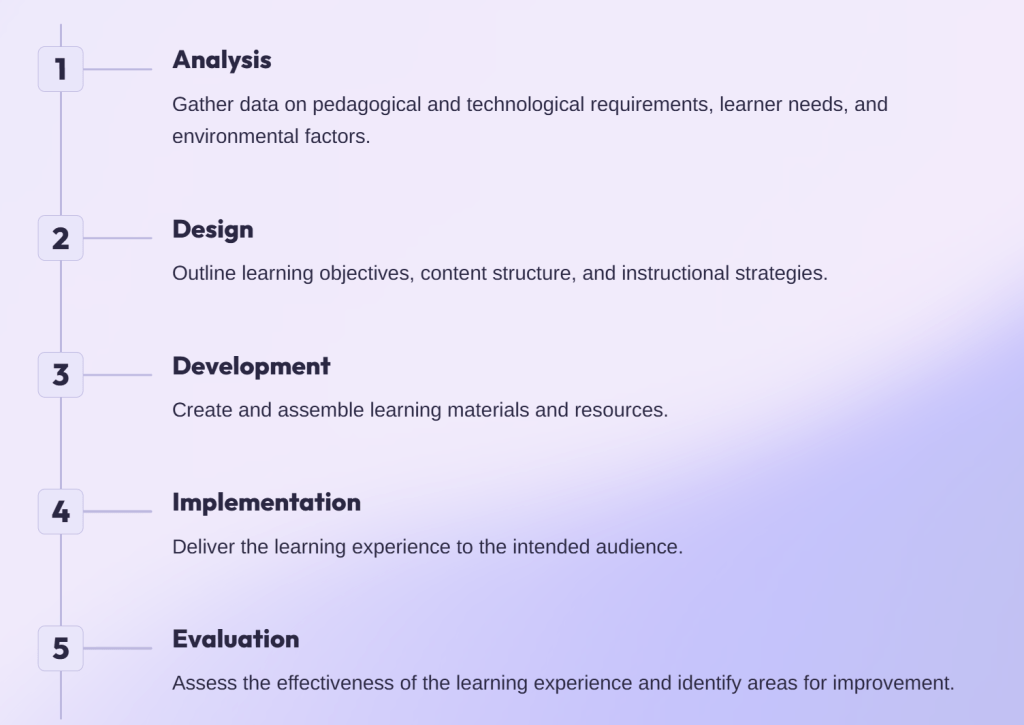
1. Analysis
The analysis phase of the ADDIE model is crucial for laying the foundation of a successful gamified e-learning experience. In this stage, instructional designers gather essential data on pedagogical and technological requirements, while also assessing the specific needs of learners and the learning environment. When incorporating gamification, this phase expands to include an evaluation of which game mechanics might be most engaging and effective for the target audience.
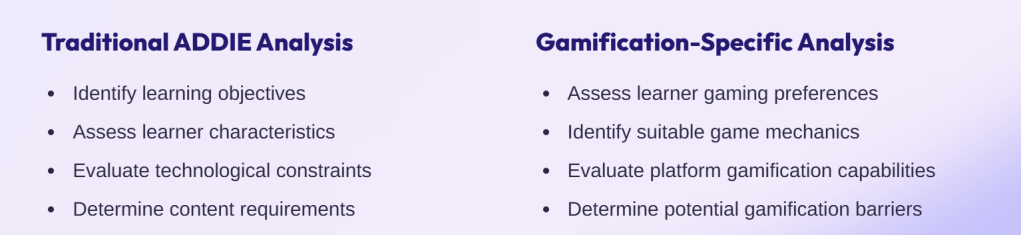
When incorporating gamification, it’s essential to go beyond traditional analysis questions. Consider the following gamification-specific inquiries:
- What types of game mechanics would resonate with the target audience?
- How can gamification elements align with and enhance the learning objectives?
- What technical limitations might affect the implementation of certain game elements?
- Are there any cultural or organizational factors that could impact the reception of gamified learning?
By thoroughly addressing these questions during the Analysis phase, instructional designers can ensure that their gamification strategy is well-informed and tailored to their specific learning context and audience needs.
2. Design
In the design phase, instructional designers outline what will be gamified, when each element will appear, and how it will contribute to the overall learning experience. This involves defining game mechanics—such as points, badges, levels, and leaderboards—and deciding how they align with specific learning objectives. Creating a clear game flow and narrative that resonates with the content is crucial for drawing in learners and keeping them engaged.
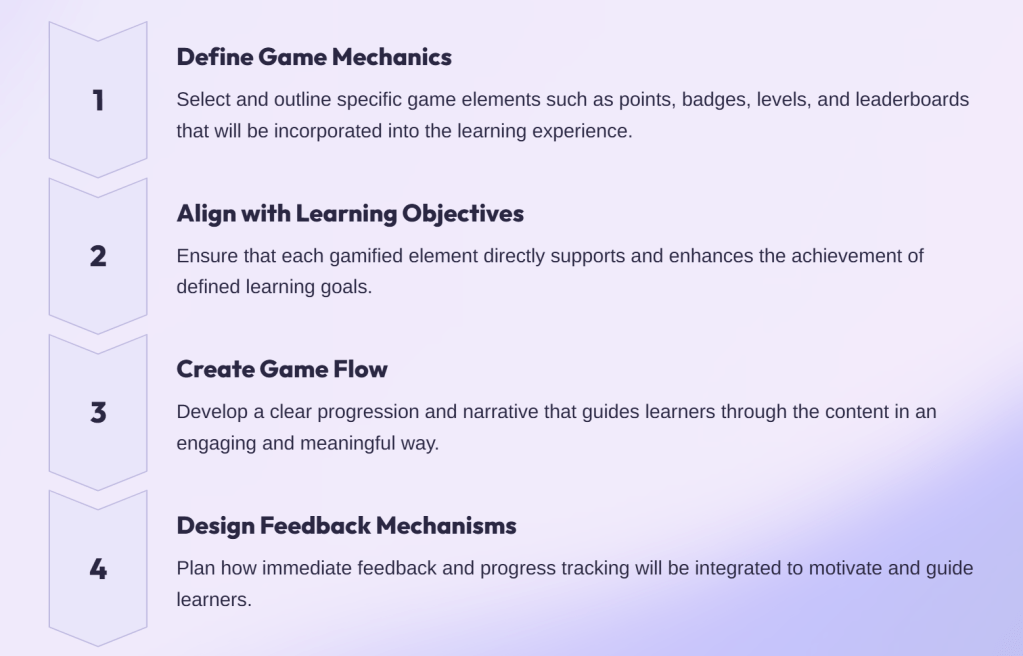
During this phase, it’s important to strike a balance between engaging gameplay and educational content. The gamification elements should enhance the learning experience, not overshadow it. Consider creating a storyboard or prototype to visualize how the gamified elements will interact with the learning material. This can help identify potential issues early in the process and ensure a cohesive design.
Additionally, think about how the gamified elements can be customized or scaled to accommodate different learner preferences and skill levels. This adaptability can lead to a more personalized and effective learning experience for each participant.
3. Development
Development is where the learning experience takes form. In this phase, designers create materials and build gamified steps, integrating game mechanics into instructional content. For example, incorporating quizzes that unlock badges or providing interactive storytelling that progresses based on correct answers allows learners to feel invested and motivated as they advance. Testing is key here to ensure that gamified elements work smoothly within the learning platform.
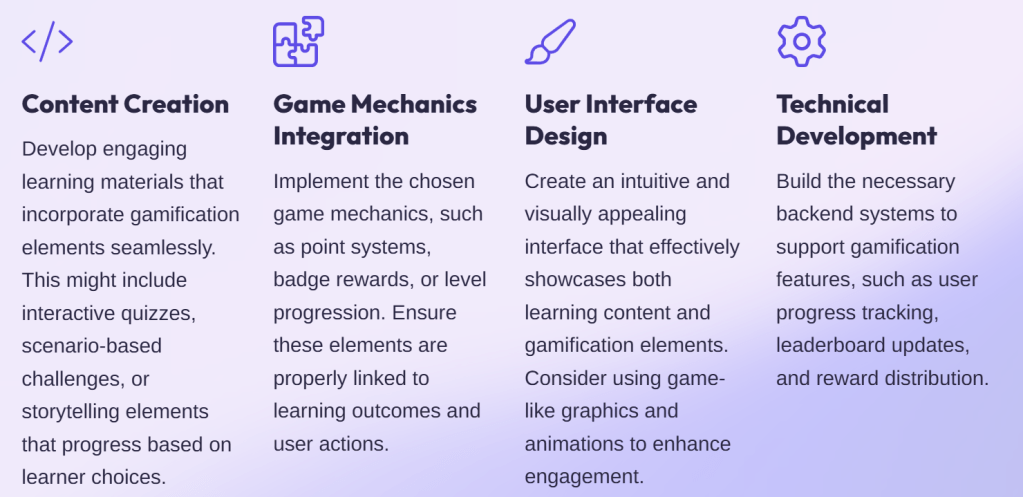
During development, it’s crucial to conduct regular testing to ensure that all gamified elements function as intended and integrate smoothly with the learning content. This includes testing on various devices and platforms to ensure accessibility and consistency across different learning environments.
Moreover, consider developing a prototype or minimum viable product (MVP) early in this phase. This allows for quick feedback and iterations, ensuring that the final product aligns with both learning objectives and user expectations. Remember, the goal is to create an experience that is not only fun and engaging but also effective in delivering the intended learning outcomes.
4. Implementation
Once the materials are developed, they are presented to learners in the implementation phase. This stage requires careful monitoring to ensure the gamified aspects work as intended and to collect initial feedback. Through a learning management system (LMS), learners can track their progress, receive feedback, and engage with the game-like elements that reinforce learning. Regular updates and feedback loops keep the gamified experience fresh and responsive to learners’ needs.
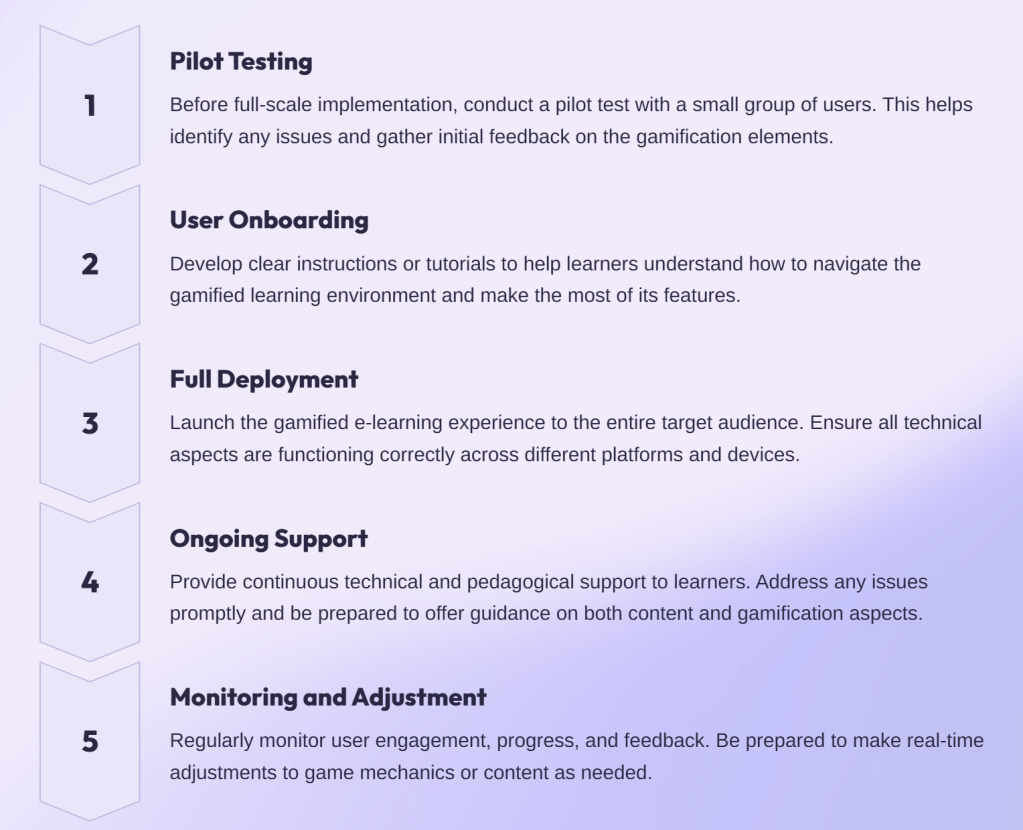
During implementation, it’s crucial to maintain open communication channels with learners. Encourage feedback and be responsive to user concerns or suggestions. This not only helps in improving the current learning experience but also provides valuable insights for future gamified e-learning projects.
Additionally, consider implementing a system for tracking key performance indicators (KPIs) related to both learning outcomes and gamification engagement. This data will be invaluable in the subsequent Evaluation phase and for continuous improvement of the gamified learning experience.
5. Evaluation
The final stage evaluates whether the gamified learning experience meets its objectives. This includes assessing user satisfaction, achievement of learning outcomes, and analyzing engagement levels. Feedback collected from learners should be reviewed to identify areas for improvement, enabling future iterations to refine the gamified approach.
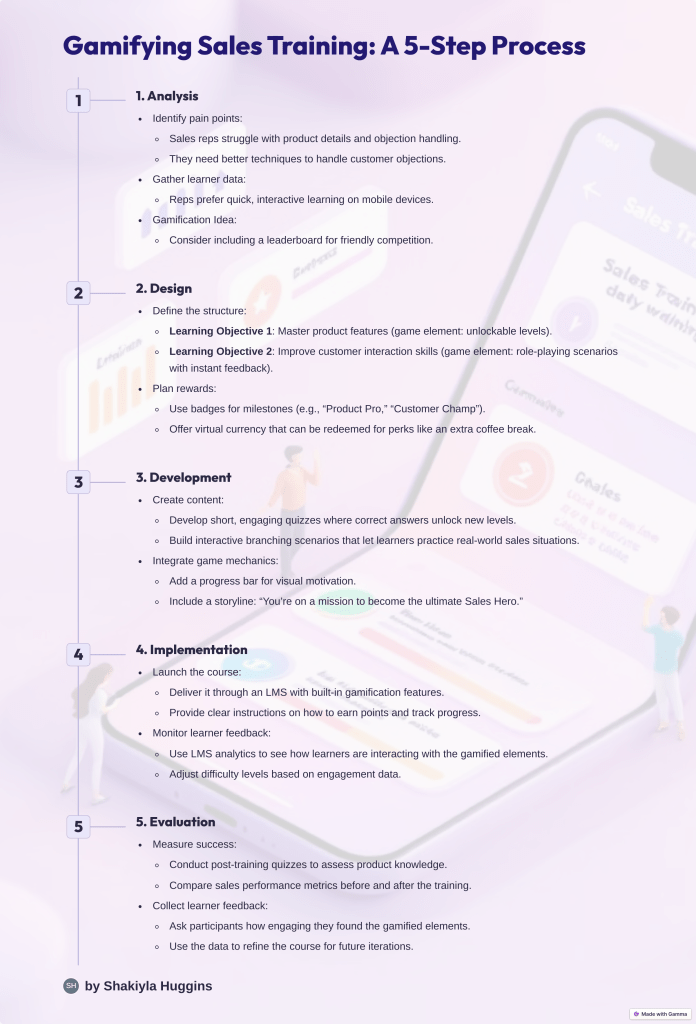
Real-World Example: Gamifying a Sales Training E-Learning Course
To illustrate how to apply Urh et al.’s gamification framework, let’s explore an example. Imagine a company aiming to enhance its sales team’s product knowledge and improve their ability to handle customer interactions. Traditional e-learning modules might provide content through slides, videos, and quizzes, but adding gamification can significantly boost engagement and retention. Here’s how the ADDIE model and gamification framework can be applied to create a highly engaging and effective training program. Click on this document to view a more detailed process.
Conclusion
By following Urh et al.’s structured framework, instructional designers can introduce gamification into e-learning environments thoughtfully and effectively. With careful attention to the ADDIE model and essential elements, this approach offers a well-rounded solution to enhance learner engagement and achievement. Gamification can transform traditional e-learning into an interactive, immersive experience, making learning not only more enjoyable but also more impactful.
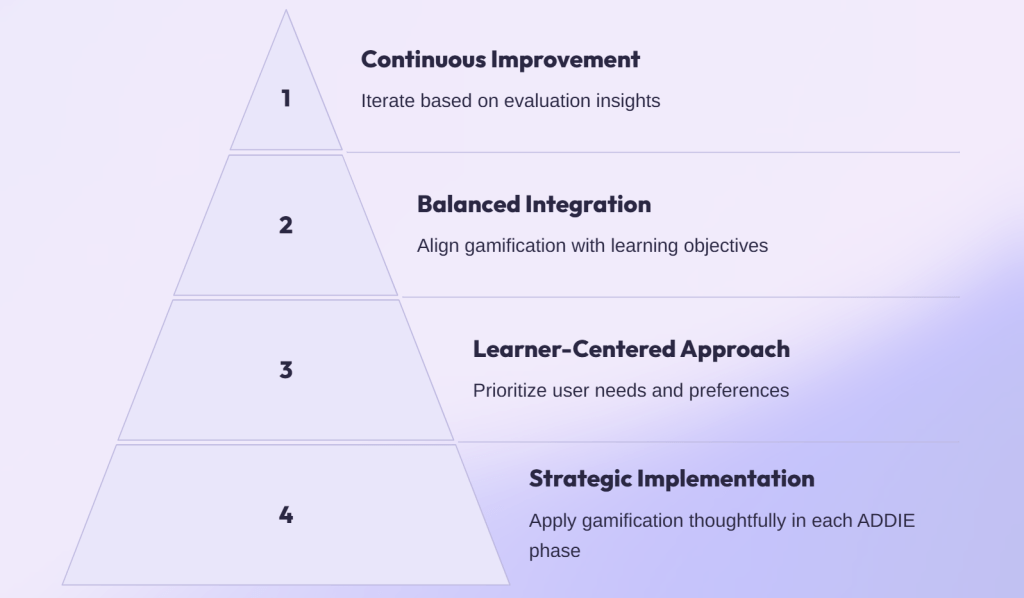
As you move forward with implementing gamified e-learning using the ADDIE framework, keep these key recommendations in mind:
- Always prioritize learning objectives over gamification elements. Game mechanics should enhance, not overshadow, the educational content.
- Regularly collect and analyze data on both learning outcomes and gamification engagement to inform continuous improvements.
- Stay flexible and be prepared to adjust your gamification strategy based on learner feedback and performance metrics.
- Keep abreast of emerging technologies and gamification trends to ensure your e-learning experiences remain cutting-edge and effective.
- Foster a culture of experimentation and innovation within your instructional design team, encouraging creative approaches to gamified learning.
By leveraging the ADDIE model as a foundation and thoughtfully integrating gamification elements, you can create e-learning experiences that not only educate but also captivate and motivate learners. Remember that successful gamification in e-learning is an ongoing process of design, implementation, evaluation, and refinement. Embrace this iterative approach, and you’ll be well-positioned to deliver impactful, engaging learning experiences in the digital age.
Urh, M., Vukovic, G., & Jereb, E. (2015). The model for introduction of gamification into e-learning in higher education. Procedia-Social and Behavioral Sciences, 197, 388-397. https://doi.org/10.1016/j.sbspro.2015.07.154
 Gamifying your Designs Through Self-Determination
Leave a comment