By Shakiyla Huggins October 27, 2023

Gamification has become the go-to in education and training, offering a promising way to engage learners and enhance the learning experience. However, implementing gamification successfully is no easy feat. It’s not just about adding game elements to existing systems; it’s about understanding the psychology of motivation and behavior while positively influencing learning outcomes. In this blog post, we explore a framework that utilize the self-determination theory as a basis for its development. These implementation methods and framework can guide the instructional design of gamification into education and training.
Understanding the Key Aspects of Implementation
The intention of every well-designed gamified model should be to “help players take on meaningful roles that are fruitful for learning”3. To do so, designers must understand and address three key aspects2:
- Know Your Audience: The first crucial step is to understand who your players, or learners, are. Tailor your gamified model to their needs and preferences.
- Define Objectives: Clearly define the overall objectives of the gamified model. What should the players ultimately learn or achieve?
- Select Appropriate Game Elements: Determine which game elements will best motivate your players. It could be points, badges, leaderboards, or other mechanisms that align with your learning goals.
Implementing Gamification for Cognitive, Emotional, and Social Impact
It is very important that designers also place an emphasis on cognitive, emotional, and social aspects when implementing gamification3:
- Cognitive Impact: Design challenges that match the player’s skill level and gradually increase difficulty. Immediate goals and multiple routes to success can support motivation and engagement.
- Emotional Impact: Reframe failure as a necessary part of learning. Provide low-stakes feedback that rewards effort, not just mastery.
- Social Impact: Create opportunities for players to develop a strong sense of identity within the gamified environment.
Game Design Framework
Gamification has become a popular approach to engage users and drive desired behaviors in various contexts, from education to business. However, the success of gamification depends on the careful design and implementation of game elements. Di Tomasso (2011) introduced a comprehensive framework called “A Framework for Success” based on the Self-Determination Theory. This framework consists of seven essential steps that take into account individual player differences and social influences.
A Framework for Success
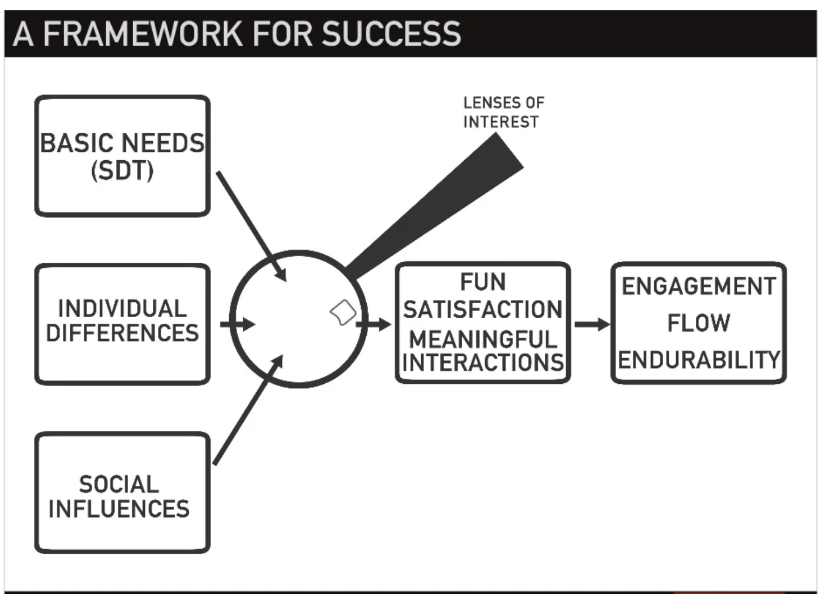
This framework employs the Self-Determination Theory and comprises seven steps:
- Determine the need for gamification.
- Identify player profiles and motivational drivers.
- Set up exciting and aspirational goals.
- Define players’ skills and actions.
- Identify interest lenses.
- Determine desired outcomes.
- Play-test and polish through iterative processes.
Let’s dive into each step:
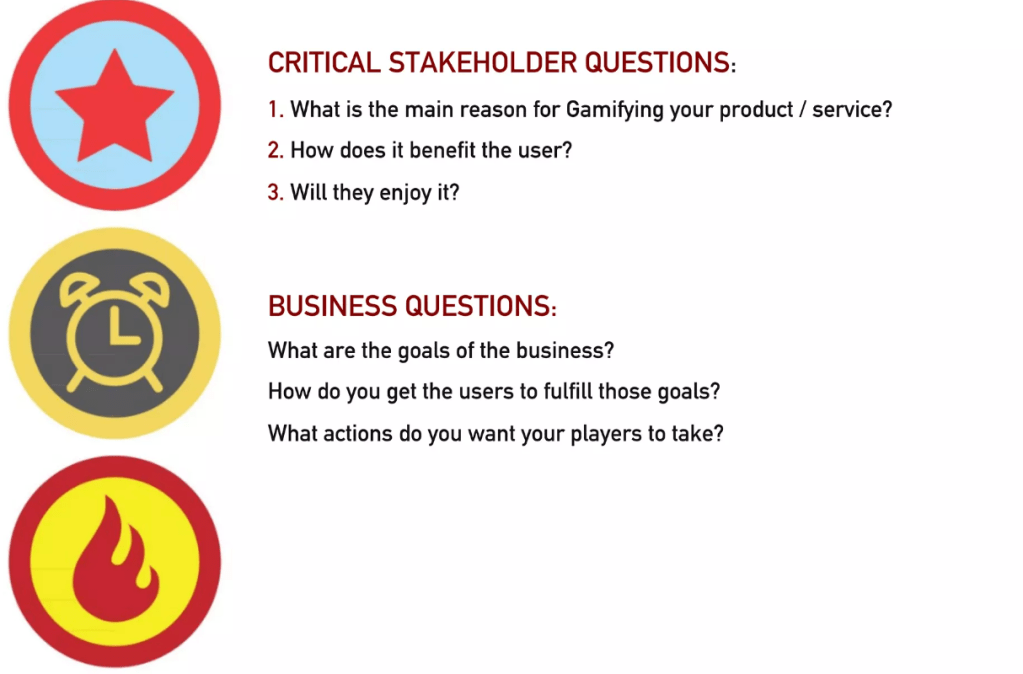
1. Determine the Reason for Gamification Before embarking on a gamification project, it’s crucial to understand why you’re doing it. Communicate with stakeholders to identify the specific need for gamification and the goals they aim to achieve. Clear objectives will guide the entire gamification process.
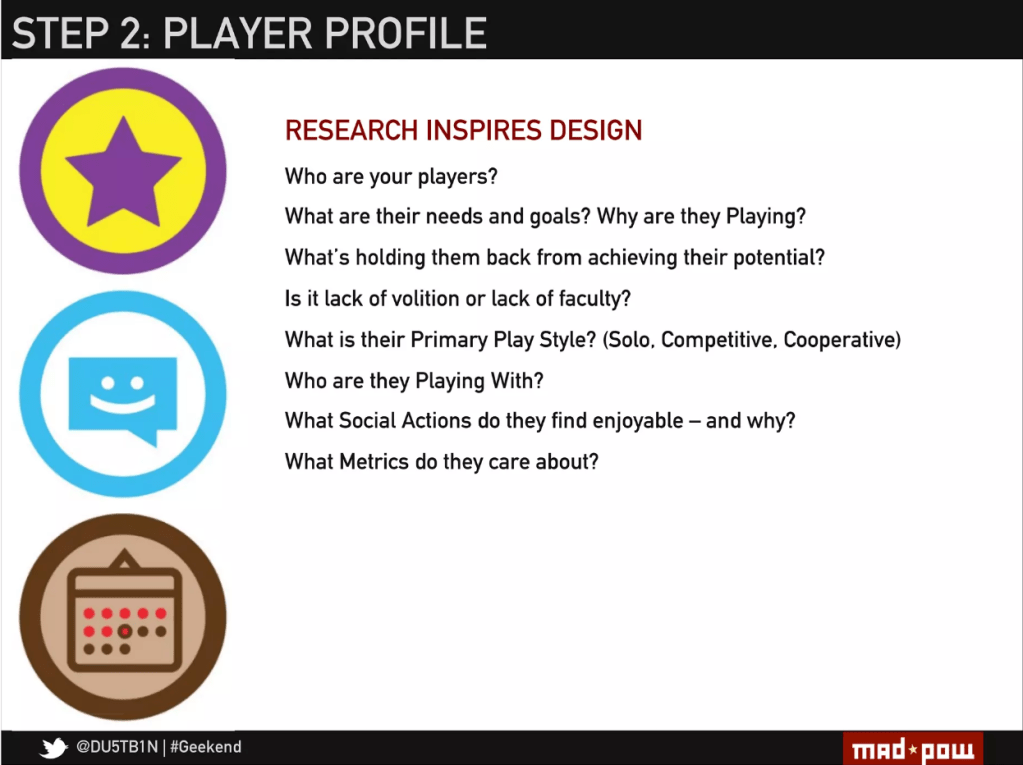
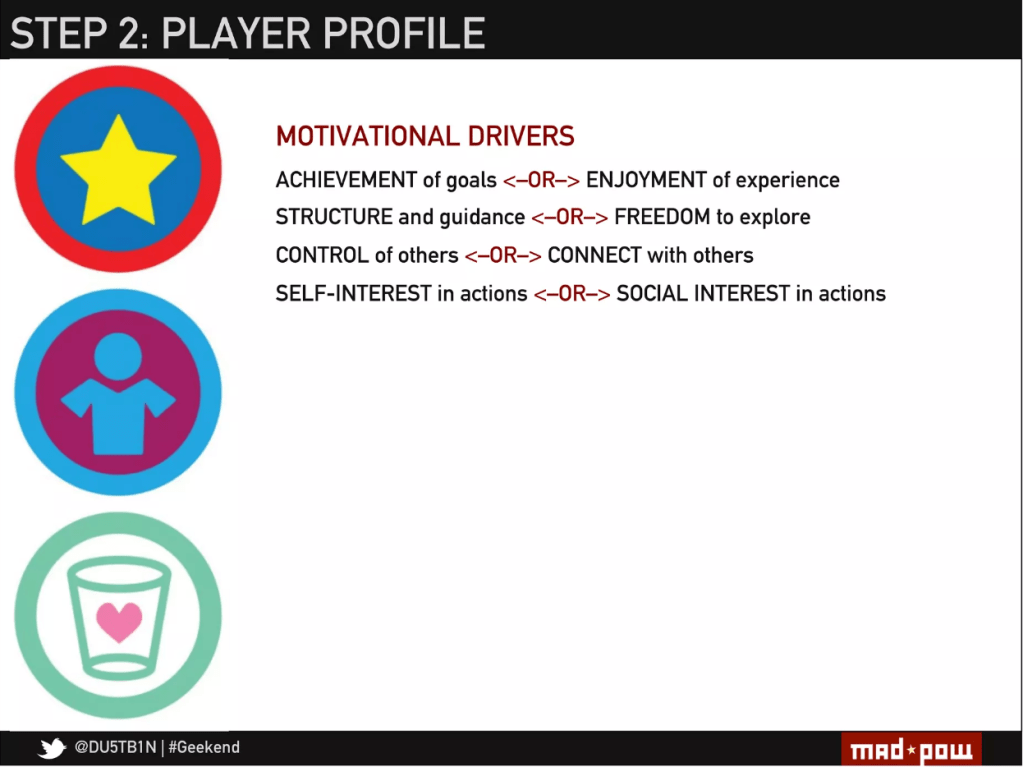
2. Identify the Player Profile and Motivational Drivers In this step, designers go a step further by pinpointing who the players are and what motivates them. What are their needs and goals? Are there underlying reasons for their difficulties in achieving their goals? Additionally, it’s important to identify the players’ primary play style, such as solo, competitive, or cooperative. Understanding motivational drivers, whether they prioritize achievement or enjoyment, structure or freedom, control or connection, and self-interest or social interest, is crucial.
3. Set Up Goals and Objectives With a clear understanding of player motivations, designers should create both long-term and short-term goals that are exciting and aspirational. Long-term goals should be challenging yet compelling, while short-term goals should break down the longer ones into discrete challenges that help players improve their skills and achieve those overarching objectives.

4. Determine the Skills and Actions of the Players To gamify effectively, create a comprehensive list of skills relevant to the gamified model, categorized as physical, mental, and social skills. These skills should be measurable and possess learning curves that can be developed over time, ensuring player growth and progress.

5. Define the Lenses of Interest Interest is a driving force in gamification. It includes elements like competition types, time pressure, scarcity puzzles, novelty, level progression, social pressures, teamwork, in-game currency, and power-ups. These lenses add depth and engagement to the gamified experience.

6. Determine the Desired Outcomes Designers should set up feedback, rewards, and results within the gamified system. These outcomes can be triggered based on player actions or specific time frames within the game. Incorporating an “epic win” can enhance the player experience, helping fulfill their need for competence. It’s important to balance success and failure to maintain player engagement.

7. Play-Test & Polish The final step in the framework involves an iterative process of testing and refining the gamified model. Regular play-testing helps ensure that the design aligns with stakeholder needs, and data-driven decisions guide each iteration, leading to a more effective and engaging gamified experience.
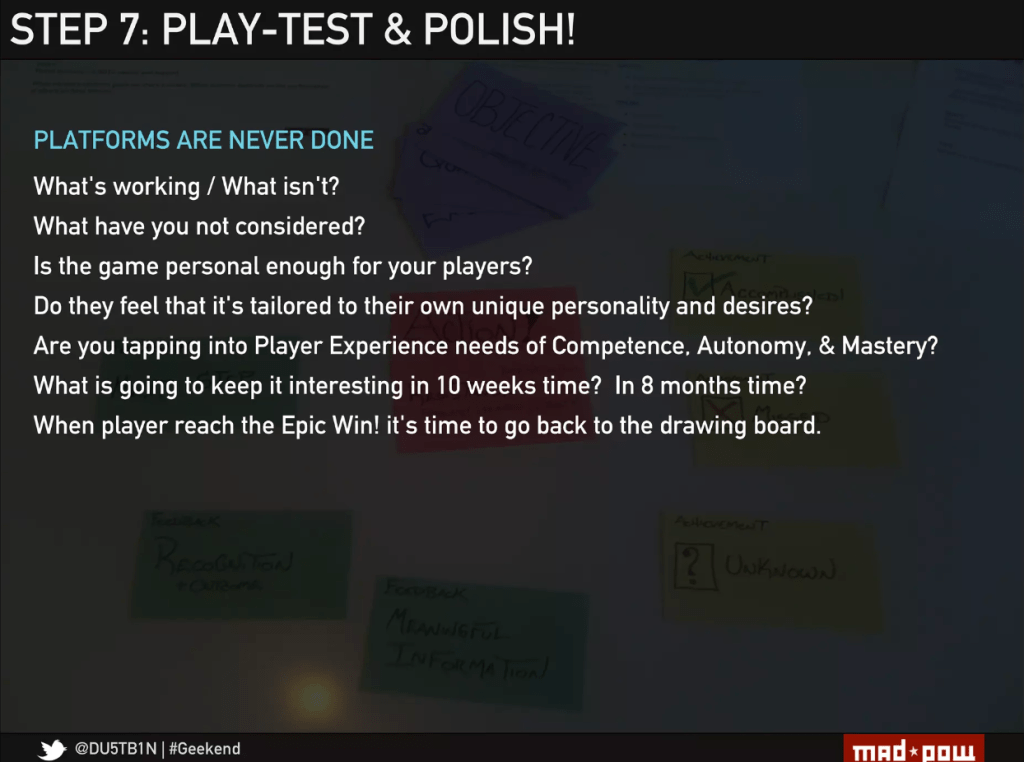
Incorporating these seven steps from the “A Framework for Success” can significantly enhance the design and implementation of gamification strategies. By understanding player motivations, setting meaningful goals, and continuously improving the design, gamification can be a powerful tool for achieving desired outcomes in various contexts. Whether you’re aiming to improve employee performance, enhance the learning experience, or drive user engagement, this framework provides a roadmap to success.
Conclusion
Effective instructional design for gamification requires a deep understanding of learners’ needs, clear objectives, and a thoughtful selection of game elements. By following established frameworks, you can create engaging, motivating, and successful gamified learning experiences.
Gamification isn’t just about adding a layer of fun; it’s a strategic approach to enhance learning outcomes, and these methods and frameworks provide a roadmap to its successful implementation.
References
- Di Tomasso, D. (2011). Beyond Gamification: Architecting Engagement Through Game Design Thinking [Slideshare]. https://www.slideshare.net/DiTommaso/beyond-gamification-architecting-engagement-through-game-design-thinking/46-A_FRAMEWORK_FOR_SUCCESS_DU5TB1N
- Cheong, C., Filippou, J., & Cheong, F. (2014). Towards the gamification of learning: Investigating student perceptions of game elements. Journal of Information Systems Education, 25(3).
- Lee, J., & Hammer, J. (2011). Gamification in Education: What, How, Why Bother? Academic Exchange Quarterly, 15(2), 146.
 Gamifying your Designs Through Self-Determination
Leave a reply to Shakiyla Huggins Cancel reply