May 13, 2026 By Dr. Shakiyla Huggins, EdD
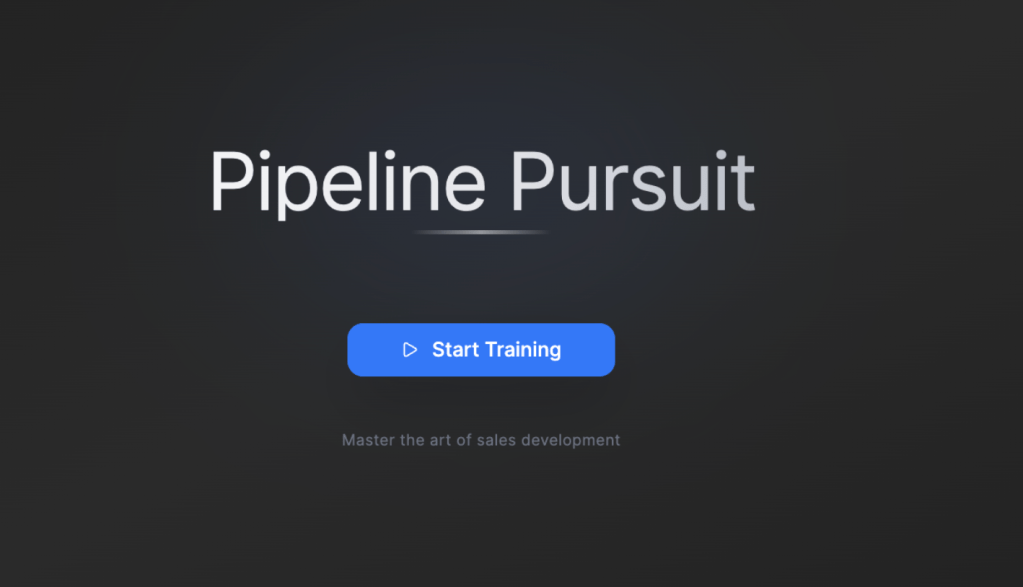
Most gamification in workplace learning still revolves around points, badges, and leaderboards.
But in enablement environments, especially technical SaaS organizations, the real challenge is not engagement alone. It is confidence.
More specifically:
Can learners interpret complex signals, make strategic decisions, and apply knowledge under pressure?
In an effort to explore new approaches to sales enablement, I designed a prototype simulation experience focused on strategic SDR decision-making.
Rather than treating gamification as decoration layered on top of content, the experience used game mechanics to simulate the cognitive demands of real enablement workflows.
The Problem With Traditional Sales Enablement Training
Many onboarding experiences do a great job explaining platforms, processes, and features. But SDR success rarely comes from memorizing product information.
It comes from:
- identifying buying signals
- interpreting engagement behavior
- prioritizing accounts
- selecting outreach strategies
- expanding stakeholder engagement
In other words, the work is decision-heavy.
Traditional onboarding often explains what the platform does, but provides limited opportunities to practice how to think inside the workflow.
That gap matters because new reps frequently struggle to transfer theoretical knowledge into real pipeline-building behavior.
So instead of building another passive course, I designed a simulation environment that recreated the early stages of SDR pipeline development.
Gamification as a Cognitive Support System
One of the biggest misconceptions about gamification is that it exists primarily to “make learning fun.” In enablement, I think the more valuable use case is reducing hesitation during complex decision-making. That was the thinking behind the simulation’s adaptive support system.
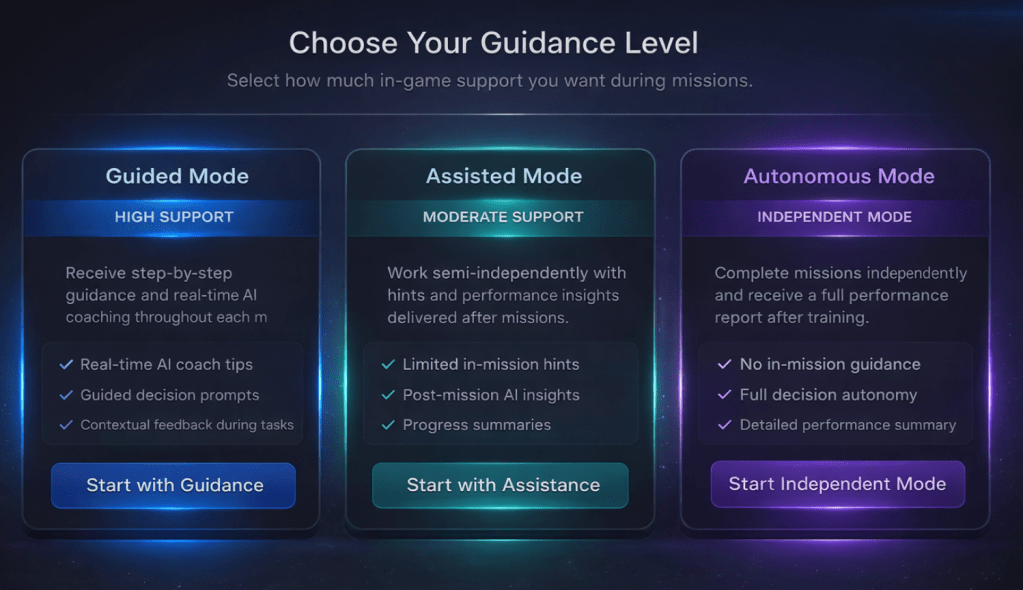
Learners could choose between three guidance levels:
- Guided Mode
- Assisted Mode
- Autonomous Mode
The modes intentionally balanced structure with autonomy:
- Guided Mode provided step-by-step coaching and real-time prompts
- Assisted Mode reduced support while still offering feedback
- Autonomous Mode removed guidance almost entirely and emphasized independent execution
The goal was not simply personalization. It was progressive confidence-building.
This approach was heavily influenced by learning science principles tied to scaffolding, self-efficacy, and the Self-Determination Theory — particularly the balance between competence and autonomy.
In many enablement environments, new hires are expected to operate independently before they feel psychologically ready to do so.
Adaptive support systems can help bridge that gap.
Why Mission-Based Learning Works Well for Enablement
The simulation was structured around missions instead of traditional modules.
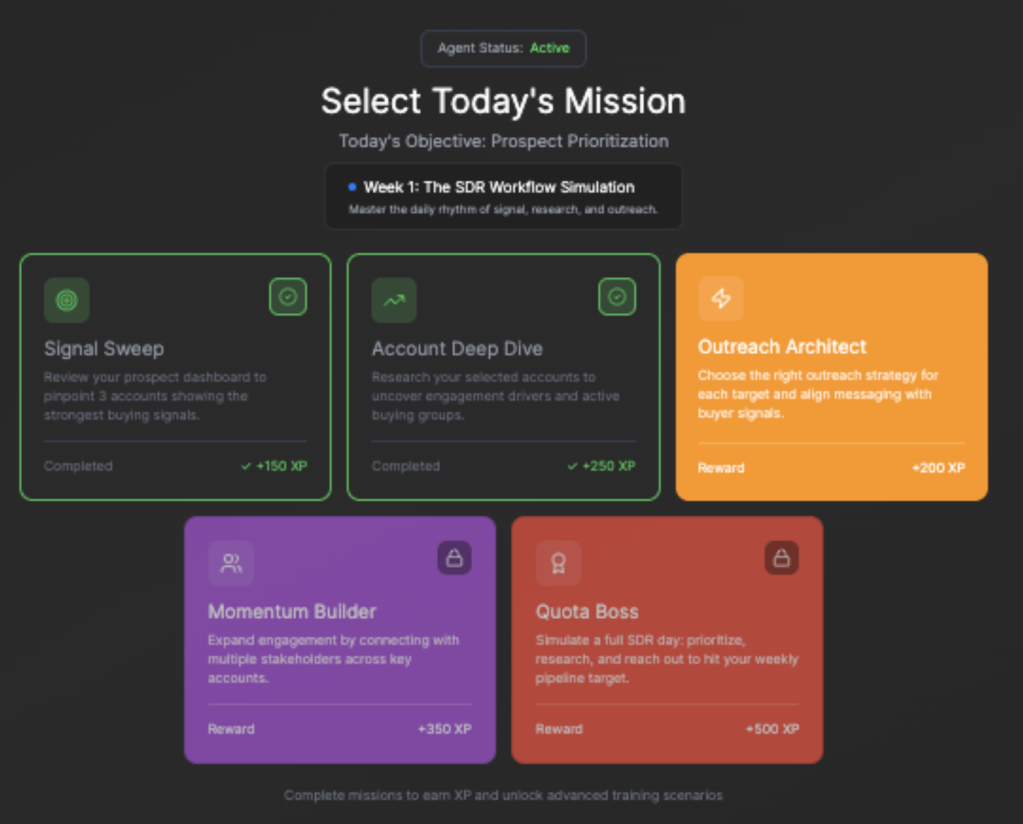
The sequence mirrored the actual SDR workflow:
- Signal Sweep
- Account Deep Dive
- Outreach Architect
- Momentum Builder
- Quota Boss
Each mission represented a real operational task rather than a content topic.
That distinction matters. In enablement, learners do not think in chapters. They think in workflows.
Mission-based learning shifts the experience from:
“Learn this information”
to
“Solve this problem.”
That design shift naturally increases contextual relevance, which is one of the biggest drivers of engagement in adult learning.
The XP rewards and badge mechanics supported progression, but they were secondary to the larger goal: creating repeated opportunities for strategic practice.
Simulating Real SaaS Decision Environments
One design priority was realism.
Instead of simplified quiz scenarios, the interface mirrored an actual sales intelligence environment with engagement scores, intent signals, activity data, and stakeholder information.
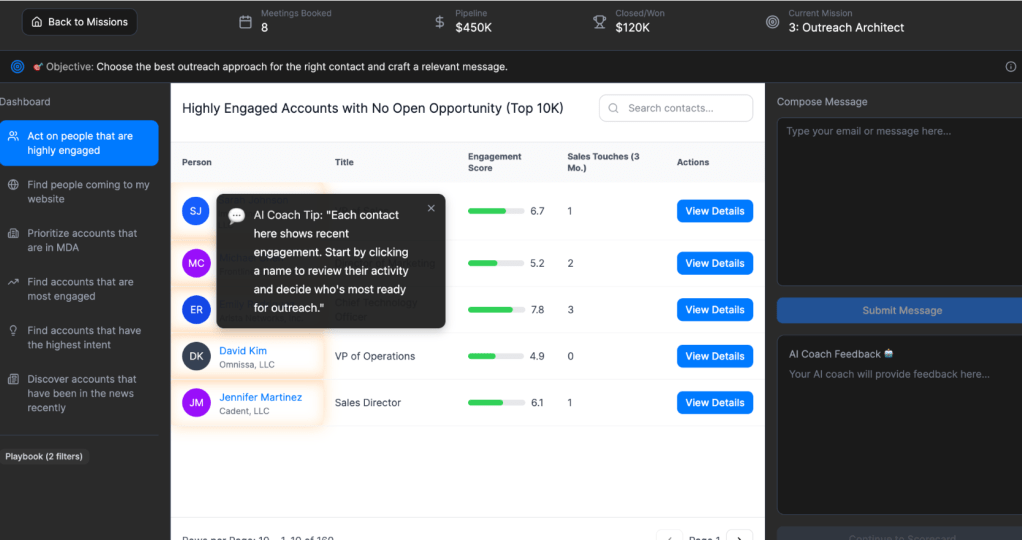
Learners needed to interpret:
- engagement scores
- intent signals
- content activity
- account roles
This matters because modern enablement increasingly involves signal interpretation.
Whether someone works in sales, customer success, product adoption, or technical enablement, learners are often expected to make decisions inside noisy systems filled with competing data points.
That means effective enablement is no longer just knowledge transfer. It is sensemaking.
And simulations can create safer environments to practice that skill before learners encounter real customers or high-stakes situations.
AI Coaching as Embedded Enablement
Another interesting layer was contextual AI coaching.
During missions, learners received prompts that functioned similarly to guidance from experienced managers.
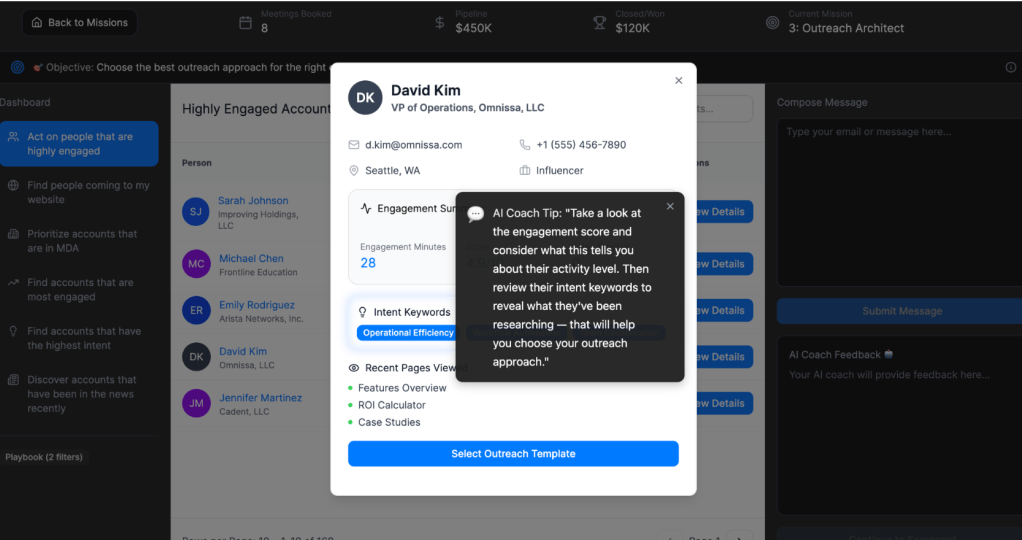
The prompts encouraged learners to:
- analyze engagement patterns
- evaluate buyer intent
- reconsider outreach strategy
- compare communication approaches
Importantly, the system avoided giving direct answers. Instead, it supported reflective decision-making.
I think this is where AI has enormous potential in enablement. Not as a replacement for learning design. But as a dynamic coaching layer embedded inside workflows.
Especially in technical SaaS environments, AI-supported simulations could eventually help organizations scale practice-based learning without requiring constant live facilitation.
The Most Important Part: Decision-Based Gameplay
The core mechanic of the simulation was not earning points.
It was making strategic choices.
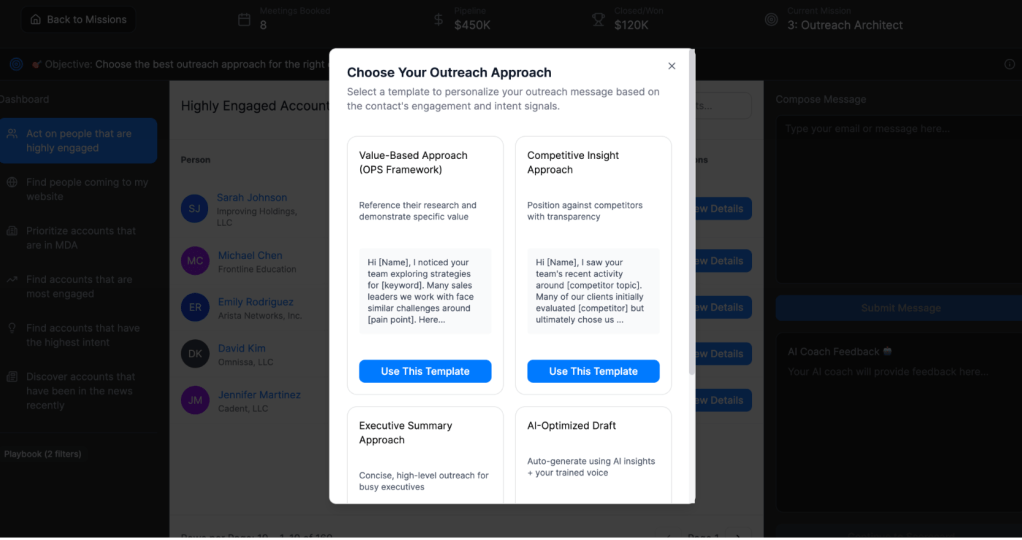
Learners selected different outreach approaches based on buyer signals and account context, including:
- Value-Based Outreach
- Competitive Insight Outreach
- Executive Summary Outreach
- AI-Optimized Drafts
After making decisions, learners received feedback explaining why certain strategies aligned better with specific buyer behaviors. That feedback loop is where the actual learning happened.
Because enablement is rarely about memorizing the “correct” answer. It is about improving judgment.
Final Thoughts
I believe the future of enablement will increasingly move toward:
- simulations
- adaptive learning systems
- AI-supported coaching
- workflow-based practice environments
- decision-centered learning design
Especially in enterprise SaaS, learners are navigating increasingly complex ecosystems filled with signals, tools, workflows, and stakeholder dynamics. That complexity cannot always be solved through slide decks or static onboarding paths. Sometimes learners need environments where they can practice thinking.
That is where gamification becomes much more than engagement mechanics. It becomes a vehicle for confidence-building, strategic reasoning, and behavioral readiness.
While Pipeline Pursuit was designed as a prototype concept, the project helped explore how simulation-based learning could support confidence-building in modern enablement environments.
And in my experience, that is where some of the most meaningful enablement learning happens.
If you’re exploring the future of enablement, product education, or simulation-based learning, I’d love to hear your perspective.
How do you see gamification, AI coaching, or workflow-based simulations evolving inside modern SaaS enablement environments?
#Gamifyeduproblog #Enablement #SalesEnablement #RevenueEnablement #ProductEducation #LearningExperienceDesign #Gamification #AI #CustomerEducation #SaaS #InstructionalDesign #LearningAndDevelopment #LearningExperience #SalesTraining #AIinLearning #SimulationLearning #FutureOfWork


Leave a comment